High-quality kitchen equipment rentals at unbeatable rates!
.png)
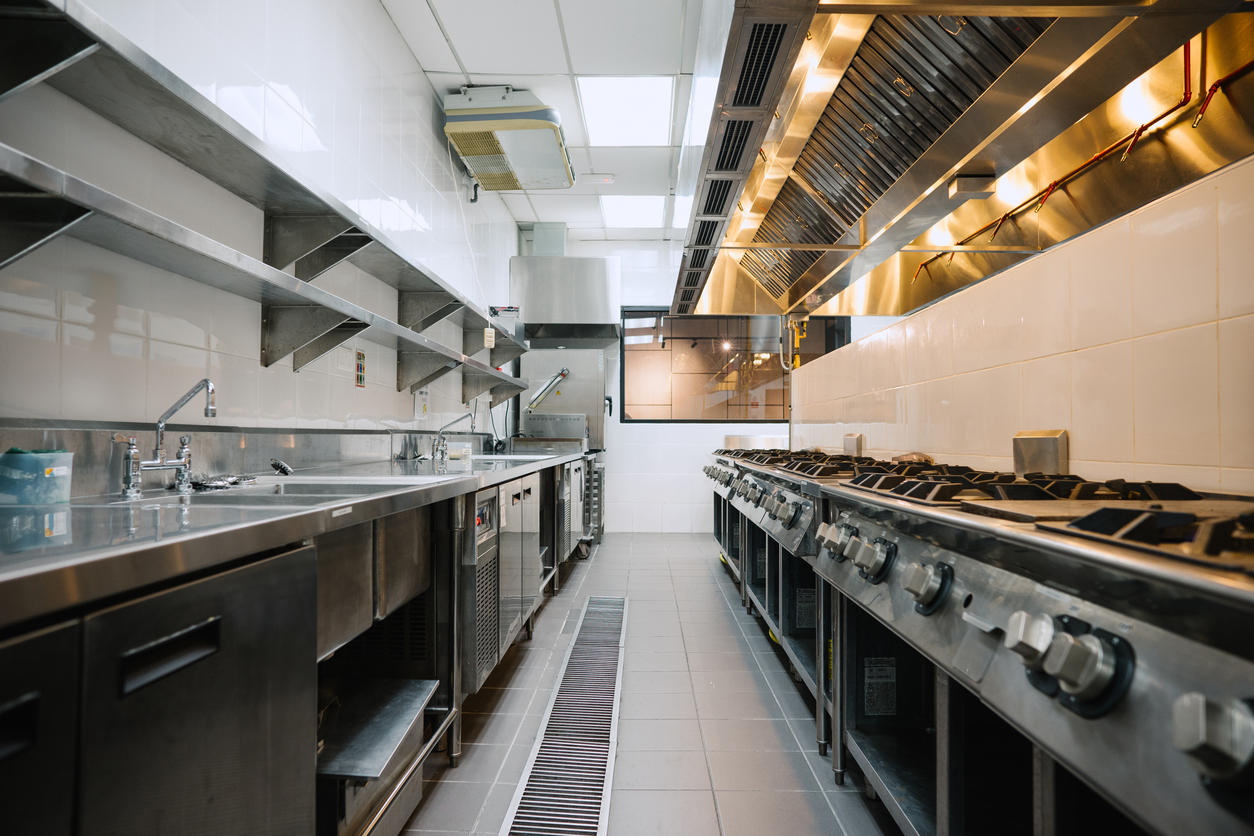
Most new restaurant owners build an equipment budget the same way: list the units, price them, total it up.
That total is usually 30 to 50 percent short of what the equipment actually ends up costing to get running — not because anyone was quoted badly, but because the equipment quote is a quote for equipment. Everything required to turn that equipment into a working kitchen sits in other line items, and several of those line items don't exist on the spreadsheet at all.
Finding affordable restaurant equipment for a new business isn't really about the unit price. It's about not being surprised by the seven costs below.
Equipment arriving at the door is not equipment working in the kitchen. Water lines, drains, gas connections, electrical hookups, and in California, seismic anchoring where code requires it. This is licensed trade work, priced by the job, and it's a separate scope from delivery.
Ice machines, dish machines, and refrigeration are the ones people most often assume are plug-and-play. None of them are.
This one shows up at rough-in and it hurts.
Your equipment list assumes a certain electrical load, gas supply, and drain configuration. Older buildings — which describes a lot of available food service space — frequently can't support it. Panel upgrades, new gas runs, and drain work are real construction costs, discovered after you've committed to a space and a menu.
The way to avoid this becoming a surprise is to get an equipment list in front of someone who can assess the space before the lease is signed, not after.
Ventilation and fire suppression are sized to your cooking line. Add a fryer or a charbroiler late in the process and you may not be adding one piece of equipment — you may be changing the hood requirement, which changes the fire suppression system, which changes the permit.
This is one of the most expensive late changes in a build-out, and it's driven entirely by equipment selection.
Getting a walk-in, a heavy range, or a modular ice machine into a tight urban space is its own job. Door widths, stairs, corners, loading access, and street restrictions all factor in. Standard delivery pricing assumes standard access.
This is the line item most new operators leave at zero, and it's the one that produces the worst surprises in year one.
Commercial equipment needs scheduled service — coil cleaning, gasket replacement, descaling, filter changes. And it breaks. Emergency and after-hours rates are meaningfully higher than standard, and equipment fails during service far more often than on a quiet Tuesday.
If your budget assumes equipment costs nothing after purchase, that assumption will be corrected for you within twelve months.
Every owned unit has a replacement date. On a five-year outlook, at least some of your opening equipment will need replacing, and that expense lands on an operation that has no capital reserve left from opening.
Rarely budgeted, always real. Removing an old unit from the space costs money. And if the concept changes or the business closes, owned equipment goes to a resale market that pays a fraction of what you spent.
Line up the two honestly:
Two of those stay with you regardless infrastructure is infrastructure. The other six are where the models genuinely diverge, and they're the ones missing from most opening budgets.
Renting doesn't make equipment free. It converts a large, uncertain, front-loaded cost into a known monthly number, at the exact moment when cash is tightest and certainty is worth the most.
Light Soda On Tap has equipped new restaurants, bars, and cafés since 1947, operating from Brisbane, CA with 2,000+ active customers and $35M+ in inventory across 50+ equipment categories.
Rentals are all-inclusive: delivery, professional installation with water, gas, and electrical connections handled by the company's own technicians, scheduled maintenance and filter changes, emergency repair with same-day service available, and equipment replacement if a unit can't be repaired quickly. One flat monthly fee — no service contracts, no repair invoices mid-month, no capital outlay.
Equipment includes refrigeration, freezers, walk-ins, cooking lines, prep tables, ice machines, display cases, and bar equipment from True, Beverage Air, Hoshizaki, Manitowoc, Perlick, Montague, Imperial, and American Range. The company is commercial-only, serving operators across California, Arizona, and Las Vegas.
How much should a new restaurant budget for equipment?
It depends entirely on menu, volume, and space. The more useful exercise is building the full list first, then pricing installation, maintenance, and replacement alongside it — those are what move the total.
Is renting equipment better than buying for a new business?
For most new operations, renting reduces upfront requirements and makes cost predictable during the period when neither cash nor revenue is certain. Whether it's better long-term depends on the full five-year comparison, not the purchase price.
Can I rent some equipment and buy the rest?
Yes, and many operators do — renting the mechanical categories that fail and require service, owning simple items like shelving, tables, and smallwares.
When should I talk to an equipment provider during a build-out?
As early as possible, ideally before the lease is final. Equipment selection drives ventilation, utility, and permit requirements, and those are expensive to change late.
Do rental agreements require long-term commitments?
Terms are flexible, without multi-year lock-ins required.
For a full equipment list and a flat monthly figure for your opening, call Light Soda On Tap at (415) 648-6262.

.png)