High-quality kitchen equipment rentals at unbeatable rates!
.png)
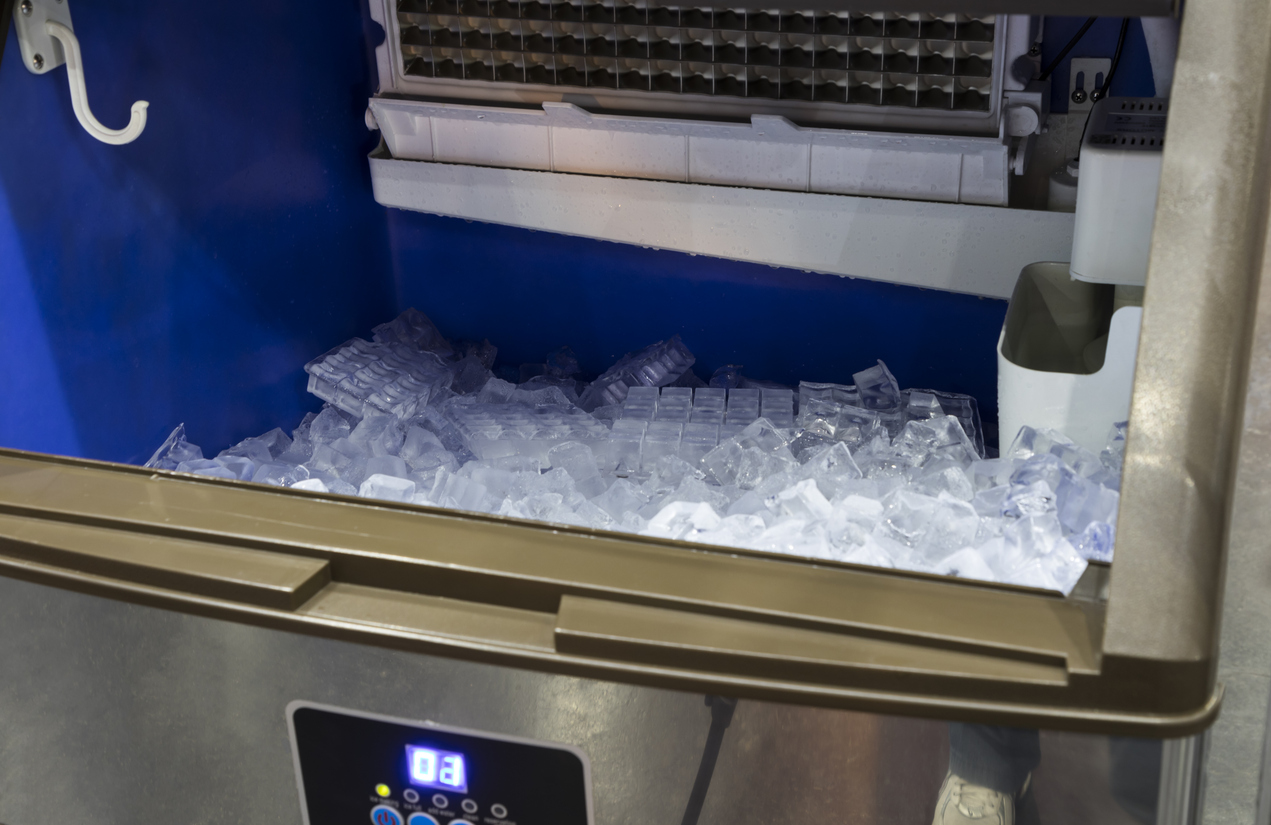
Walk into any commercial kitchen supply showroom and you will find more ice machine options than most operators expect. The differences between them are not cosmetic. Machine type, ice shape, and production capacity all have direct implications for how well the equipment serves your specific operation.
This guide covers the main types of commercial ice machines, what each is designed for, and how to think through which one belongs in your restaurant, bar, or café.
Modular ice machines, sometimes called ice machine heads, are the high-output workhorses of the commercial ice industry. They produce ice and discharge it into a separate storage bin below the unit.
The key characteristic of a modular machine is volume. Models typically produce 300 to 1,000 or more pounds of ice per 24 hours, making them well-suited for full-service restaurants, hotel dining rooms, sports bars, and any operation where high-volume, continuous ice production is necessary.
The tradeoff is space. A modular machine and its bin require dedicated floor space and proper clearance for ventilation. They are not practical for tight bar setups or small café kitchens.
Best for: full-service restaurants, high-volume bars, hotel food and beverage operations, central ice production serving multiple service points.
Undercounter ice machines are self-contained units where ice production and storage happen in the same footprint. They are designed to fit beneath a standard bar or prep counter, which makes them a natural fit for space-constrained environments.
Production capacity ranges from roughly 50 to 350 pounds per day depending on the model. This is sufficient for smaller operations, but operators with high ice demand will find undercounter machines limiting.
The space efficiency of an undercounter unit often makes it the practical choice even for operations that could technically handle a modular machine, simply because the footprint fits the layout.
Best for: bars, cafés, smaller restaurants, secondary ice stations in larger operations, hotel in-room service areas.
Countertop ice machines are compact, self-contained units that sit on a counter surface rather than occupying floor space. They are commonly found in healthcare environments, quick-service restaurants, and specialty beverage concepts where nugget ice, the soft, chewable pellet format, is a specific product requirement.
Nugget ice has developed a loyal following in certain beverage markets, and some restaurant and café concepts deliberately feature it. If nugget ice is part of your brand, a countertop or freestanding nugget machine is purpose-built for that application.
Production capacity for countertop units is relatively low, typically 50 to 200 pounds per day, which limits their use as a primary ice source for high-volume operations.
Best for: healthcare facilities, quick-service restaurants, beverage-forward concepts, supplemental ice at specific service points.
Beyond machine format, the shape of ice produced has meaningful implications for different applications.
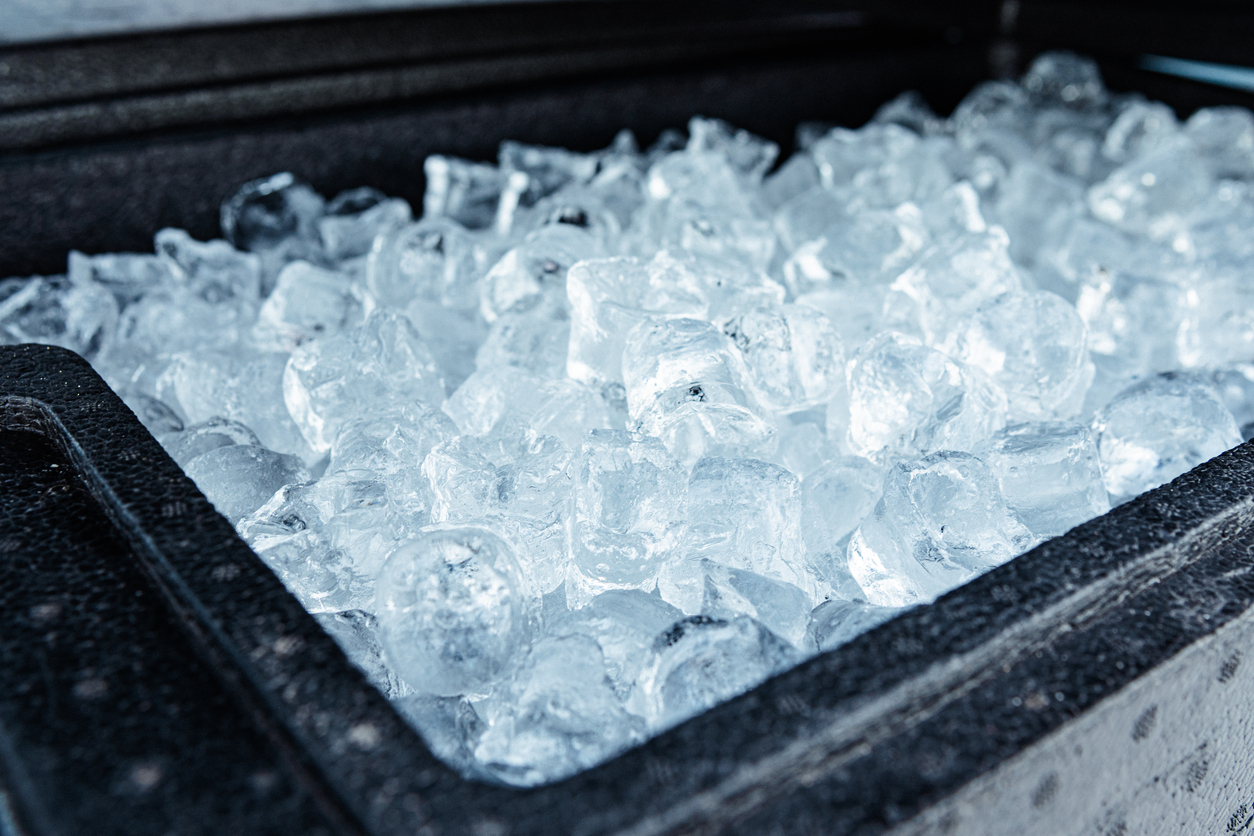
Cube ice is the standard for most food service applications. Full-size and half-size cubes are used in mixed drinks, fountain beverages, and general food service. They melt more slowly than other formats, which is valuable in beverage applications.
Nugget ice, also called pellet or Sonic ice, is soft, compressible, and absorbs flavor. It is popular in fountain drinks, cold brew coffee, and specialty beverage programs. It also dilutes faster than cube ice.
Flake ice has a high surface area and is primarily used in food display, seafood counters, salad bars, produce display, and healthcare patient care. It is not typically used in beverages.
Crescent ice is a half-moon shape that sits between full cube and half cube in terms of surface area. It is common in commercial fountain systems and works well in standard beverage service.
For most restaurants and bars, cube or crescent ice serves general beverage needs effectively. If your concept has a specific ice format as part of the experience, a craft cocktail bar featuring clear ice or a café known for its nugget ice, machine selection follows the format requirement.
This distinction matters for installation planning more than most operators realize.
Air-cooled machines are standard in most commercial settings. They discharge heat into the surrounding air and require adequate clearance and ventilation to operate efficiently. In poorly ventilated or very warm kitchen environments, performance may be affected.
Water-cooled machines use water to dissipate heat rather than air. They are more efficient in hot or poorly ventilated environments but require a water supply connection for the condenser circuit, which adds to installation complexity and ongoing water usage costs. Some markets have restrictions on water-cooled equipment due to water consumption concerns.
For most California and Arizona operators, air-cooled machines are the standard choice. Confirm ventilation requirements with your installation technician before committing.
One consideration that varies across the types of commercial ice machines is the economics of renting vs. buying. High-output modular machines carry a significant purchase price, often $8,000 to $15,000 for a top commercial brand, making rental a meaningful alternative to a large capital outlay. Undercounter units are less expensive to purchase but still carry ongoing maintenance and repair costs that a rental agreement eliminates.
The rental model applies across all commercial machine types. LSOT carries modular, undercounter, and countertop formats and can match equipment to your specific operational requirements. If you are ready to explore options in your area, find an ice machine rental near me to connect with a local provider who can recommend the right machine for your setup.
Q: What are the main types of commercial ice machines?
The main categories are modular (high-output, separate bin), undercounter (self-contained, space-efficient), and countertop or nugget machines (compact, specific ice format). Each is designed for different volume, space, and application requirements.
Q: What is the difference between modular and undercounter commercial ice machines?
Modular machines produce higher volumes (300 to 1,000 or more lbs/day) and require a separate storage bin. Undercounter machines are self-contained and fit beneath standard counters, producing 50 to 350 lbs/day, better suited for smaller operations and space-constrained setups.
Q: Which ice machine is best for a bar?
Most bars use undercounter machines for their space efficiency, with production capacity matched to daily volume. High-volume bars may require a modular unit. Craft cocktail bars focused on clear ice use specialized machines designed for that format.
Not sure which of the types of commercial ice machines is right for your operation? Contact us and the LSOT team will help match the right equipment to your restaurant, bar, or café across California, Arizona, and Las Vegas.

.png)