High-quality kitchen equipment rentals at unbeatable rates!
.png)
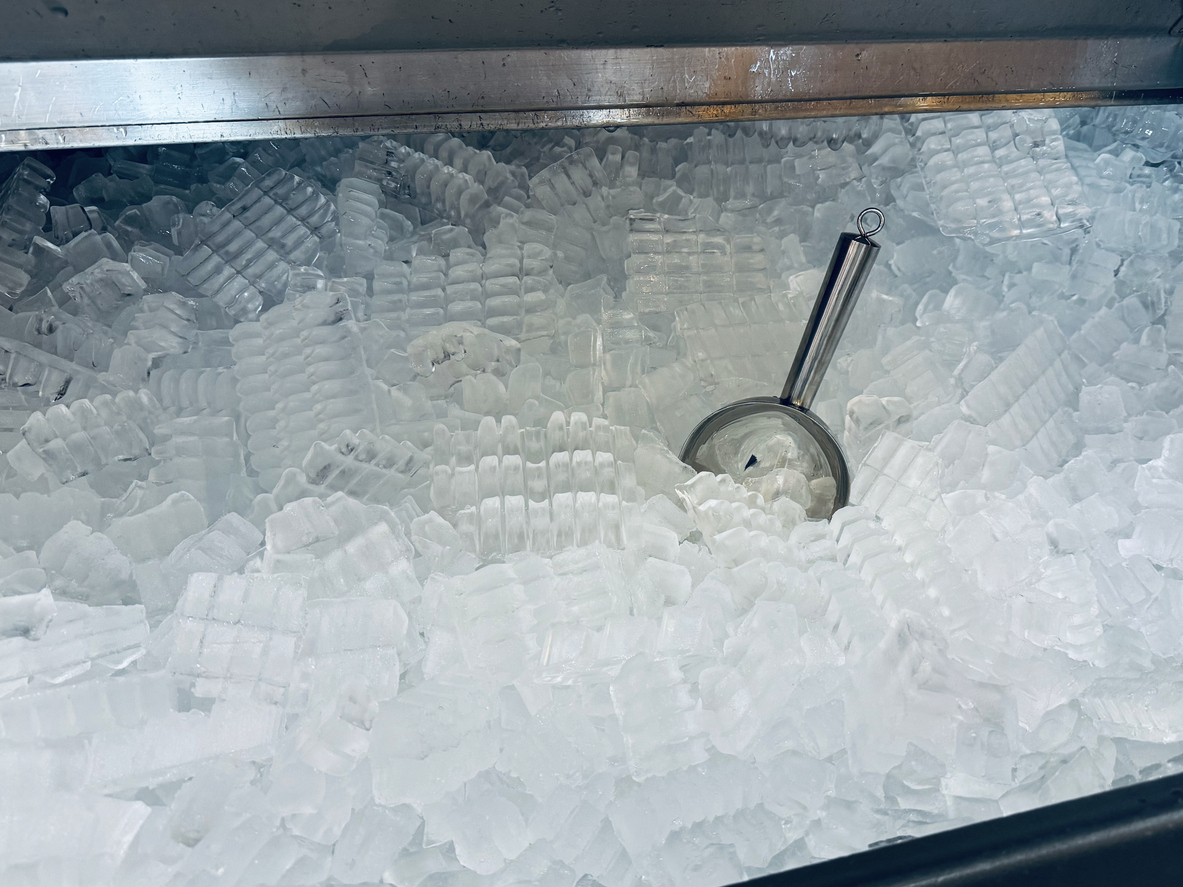
Most operators searching for an ice machine rental near me are focused on delivery speed and monthly cost. Sanitation responsibility rarely comes up until an inspector opens the bin lid and finds pink or black slime along the interior walls.
Here's the short answer: cleaning responsibility depends entirely on how the rental agreement is written. Some providers hand you the machine and the manual, and everything after installation is yours. Others build scheduled cleaning and descaling into the monthly fee. Both are legal. Only one of them keeps the work off your staff's plate.
This guide covers what health inspectors actually look for, what "maintenance included" does and doesn't cover across the industry, and the specific questions to ask a local provider before you commit.
Ice is a food. That's not a technicality it's how the FDA Food Code and every health department that follows it classify it. That classification means the equipment producing it is held to food-contact surface standards, and the ice itself can be embargoed or condemned if the machine is found in unsanitary condition.
The two things inspectors flag most often on commercial ice machines:
Biofilm. Ice machines run warm, wet, and dark inside. Airborne yeast and mold settle on evaporator plates, in the water distribution tube, and along bin walls, then build into slime layers. It's the single most common ice machine violation.
Scale. Hard water leaves mineral deposits on the evaporator. Scale doesn't just cut production and shorten machine life — it also creates rough surfaces that biofilm anchors to.
Neither problem is visible from the outside. A machine can look spotless, produce ice normally, and still fail an inspection on the interior.
This is where operators get caught. Maintenance and sanitation are frequently treated as separate categories in rental agreements.
A provider can accurately say "maintenance is included" while still expecting you to schedule and pay for sanitation service. The word to ask about isn't maintenance. It's cleaning.
Manufacturers publish their own intervals, and those intervals are what an inspector will reference if there's a dispute. Most commercial units call for a full cleaning and sanitizing cycle at least twice a year. Operations with hard water, heavy volume, high ambient kitchen temperatures, or nearby fryer grease often need it quarterly.
Alongside that, daily and weekly tasks stay with your team regardless of who owns the machine: keeping the scoop stored outside the bin, wiping the lid and exterior, and keeping the area around the unit clear so the condenser can breathe.
Ask these directly. Vague answers here tend to become invoices later.
"Near me" isn't really about mileage. It's about whether a technician can be in your kitchen the same day when a machine goes down mid-service or an inspector gives you a correction window. A provider dispatching from a local yard can hit that window. A national call center routing a ticket to a third-party contractor usually can't.
Light Soda On Tap has rented commercial ice machines to Bay Area food service operators since 1947, working out of Brisbane, CA with a service team covering the region daily. Rentals are all-inclusive: delivery, installation, maintenance, repairs, and replacement under one monthly fee, with no separate service invoices to reconcile.
The company works exclusively with commercial operators — restaurants, bars, cafés, ghost kitchens, and hotel F&B — and carries machines from Hoshizaki, Manitowoc, Scotsman, and Ice-O-Matic in cube, nugget, flake, undercounter, and modular configurations. Service extends across California, plus Nevada and Arizona markets.
Does a rented ice machine still need to pass health inspection?
Yes. Inspection applies to the equipment in your kitchen regardless of who owns it. The rental agreement determines who does the work, not whether the standard applies.
Can my kitchen staff clean the machine themselves?
They can handle daily exterior tasks. Full interior sanitation requires partial disassembly and manufacturer-approved chemicals, which is why most operations leave it to a technician.
What happens if scale buildup damages the machine?
Under an all-inclusive rental, repair and replacement are covered. Under a machine-only lease, damage tied to neglected maintenance is often billed to the renter — worth checking the language.
How do I prove the machine has been serviced?
Ask your provider for service documentation after each visit and keep it with your other compliance records.
If you're comparing ice machine rental options and want cleaning responsibility spelled out clearly, call Light Soda On Tap at (415) 648-6262 for a custom quote built around your volume, kitchen layout, and service needs.

.png)