High-quality kitchen equipment rentals at unbeatable rates!
.png)
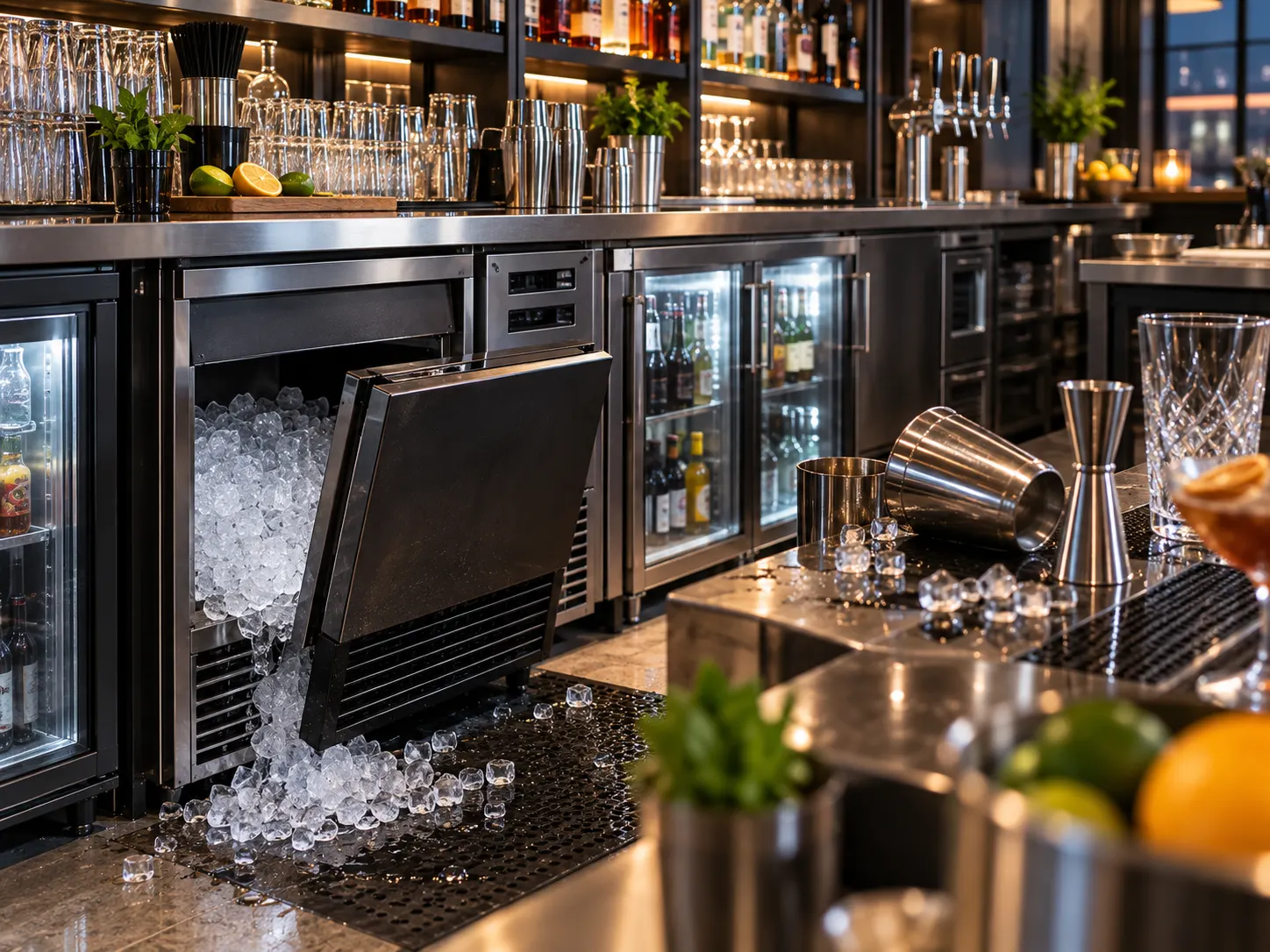
Most operators think about bar equipment in terms of price and delivery speed: which kegerator is in stock, which ice machine can be installed by Friday, which supplier quotes the lowest monthly rate.
That's the wrong comparison to be making. The expensive problem isn't the price tag, it's what happens when a glycol chiller, ice machine, or bar refrigerator fails at 9 p.m. on a Saturday. A failure mid-service doesn't just mean a repair bill. It means warm beer, flat kegs, a backed-up well, and a bartender apologizing to a full room.
Bar equipment failure during service costs far more than the repair itself, it costs lost drink sales, spoiled product, and guest experience during your highest-volume hours. Operators reduce that risk by shifting maintenance and emergency repair responsibility to a rental provider instead of managing it themselves, since most failures happen from wear and tear that preventive maintenance would have caught.
When a piece of bar equipment goes down during service, the visible cost is the repair invoice. The costs underneath it are usually larger.
Here's what a single Saturday-night failure typically looks like for a mid-volume bar:
Before any parts, compressor, or full unit replacement
That's the cost of one bad night on one machine. Bars running older equipment or skipping preventive maintenance tend to see this more than once a season.
Bar equipment rarely fails at 2 p.m. on a Tuesday. It fails under load, which is exactly when the cost is highest. The most common failure points:
Most of these failures are preventable with scheduled maintenance. Few operators catch them in advance because routine maintenance isn't something that happens naturally in a fast-paced bar environment, it has to be scheduled by someone whose job is to track it.
Ownership can work well for operators with a strong in-house maintenance routine. For bars running lean staff and tight margins on a Friday night, the bigger risk is usually not having anyone watching the equipment until it fails.
Not every rental agreement protects against mid-service failure the same way.
The distinction matters most at 9 p.m. on a Saturday. A machine-only lease means the operator is calling around for a technician mid-rush. An all-inclusive agreement means that call is already someone else's responsibility.
Confirming these answers before signing prevents the worst version of this problem: finding out what's excluded in the middle of a busy shift.
Light Soda On Tap has served Bay Area bars, restaurants, and hospitality operators since 1947. The model is built specifically to remove the mid-service failure risk described above: one flat monthly fee covers professional installation, preventive maintenance, emergency repairs, and equipment replacement, with no separate service invoices.
Bar-specific equipment categories include:
Equipment comes from established manufacturers including Perlick, True Refrigeration, Beverage Air, Hoshizaki, and Manitowoc.
With over 2,000 active customers and more than $35M in equipment inventory, service stays local across the SF Bay Area, including San Francisco, Oakland, San Jose, Berkeley, Marin, and the Peninsula and East Bay. Local dispatch means a shorter wait when a call comes in on a Friday night, rather than waiting on a technician traveling in from out of the area. Operators can review current bar equipment rental options to see what's available by category.
This model isn't the right fit for every bar. Operators with strong in-house maintenance already in place may not need it. For bars that would rather not manage emergency repair calls mid-shift, the all-inclusive structure is built to take that off the table.
How often should bar equipment be serviced to prevent mid-service failures?
Most high-use bar equipment, particularly ice machines and draft cooling systems, benefits from preventive maintenance at least quarterly. Higher-volume bars often need it more frequently.
Does rental coverage include weekend or after-hours emergency repairs?
It depends on the agreement type. All-inclusive rentals typically cover this under the flat monthly fee, while machine-only leases and basic maintenance contracts often bill emergency calls separately.
What's the most common cause of bar equipment failure during service?
Cooling system strain, particularly in ice machines and glycol-based draft systems, is one of the most common failure points, usually from continuous high-volume use without scheduled maintenance.
If a rented ice machine fails during service, is a replacement unit provided?
Under an all-inclusive rental, replacement is typically included as part of the agreement. It's worth confirming ahead of time whether a provider stocks backup units for high-failure-risk equipment.
Operators looking to reduce the risk of bar equipment failure during service can contact Light Soda On Tap to review current inventory and rental terms, or call (415) 648-6262. For sales inquiries, reach the team directly at (415) 787-6626.

.png)